
Transforming Digital Beauty Experiences
Transforming Digital Beauty Experiences
Transforming Digital Beauty Experiences

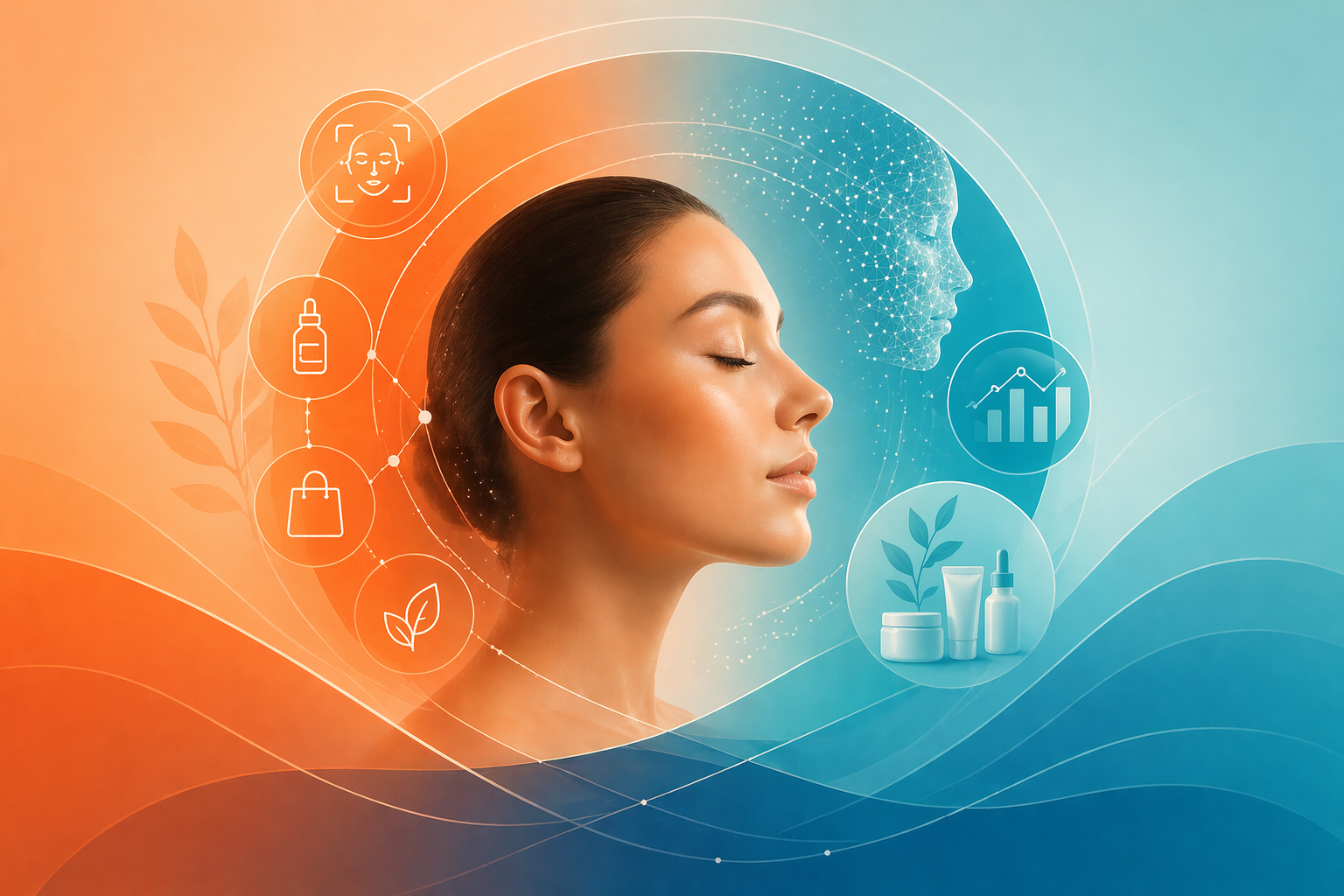
Beauty has always been an intimate category. Recommendations are shaped by trust, nuance, and feeling—advice that sounds like it understands you. In 2025, however, the “expert” guiding millions of consumers through beauty decisions is no longer a store associate, influencer, or search engine. It’s part of an AI-powered discovery layer.
When consumers ask questions like “What retinol works for sensitive skin?” or “Which foundation is hydrating and under $50?”, those questions are increasingly answered inside conversational AI platforms. Generative AI instantly pulls from product data, reviews, and brand signals to deliver a recommendation—compressing what used to be a multi-step journey into a single interaction.
The impact of this shift is hard to overstate. Harvard Business Review reports that 58% of consumers now rely on generative AI for product recommendations, up sharply from 25% just two years earlier. During the 2024 holiday period, referrals from AI platforms to retail sites surged by 1,300%, while traditional search traffic declined significantly. Even more telling: AI-sourced visits convert at 6.7%, compared to 3.9% from classic search.
This evolution has introduced a new performance benchmark: Share of Model (SOM)—how frequently and positively AI systems surface a brand in their responses. If your products aren’t included in AI-generated answers, you’re effectively invisible in today’s discovery environment. Structuring product data clearly, supporting claims with science, and sending strong credibility signals has become the modern equivalent of SEO.
Yet generative AI has a limitation. It can recommend products, but it can’t create emotional attachment. It can explain what to buy, but not why a brand belongs in someone’s daily routine. That role belongs to the agentic layer—the brand-owned, intelligent environments where AI-powered tools continue the relationship.
Once an AI platform introduces a product, consumers typically move next to a brand’s DTC site or a retailer’s digital experience. This is where rational intent turns into emotional conviction. Visitors arrive with a clear goal—hydration, clean formulas, dermatologist validation—and winning brands respond with experiences that feel personal rather than transactional.
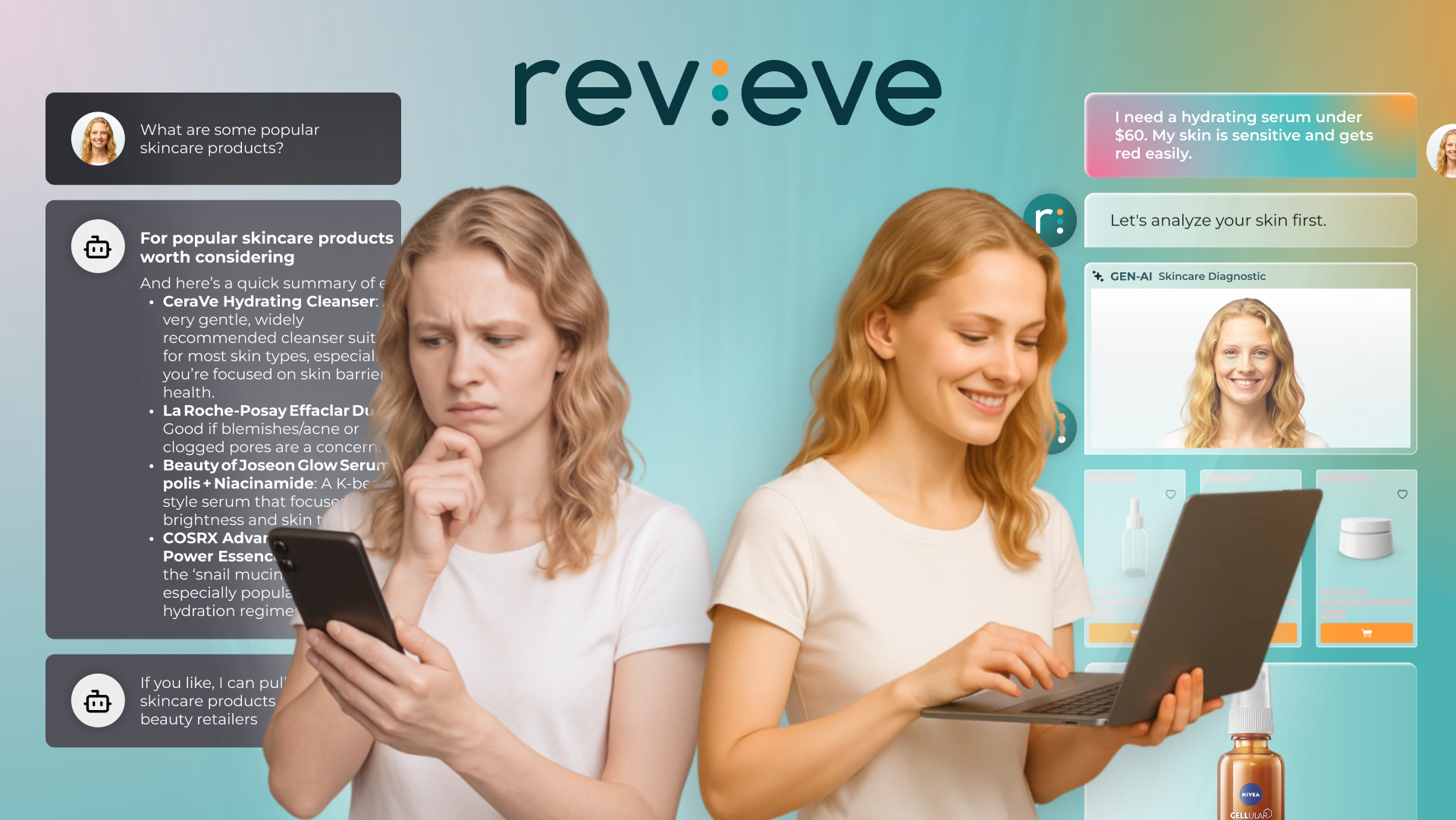
High-performing beauty brands extend the conversation through immersive, tailored journeys: guided routines, interactive consultations, skin or hair diagnostics, and recommendation flows that adapt in real time. These experiences translate intent into confidence—and confidence into conversion.
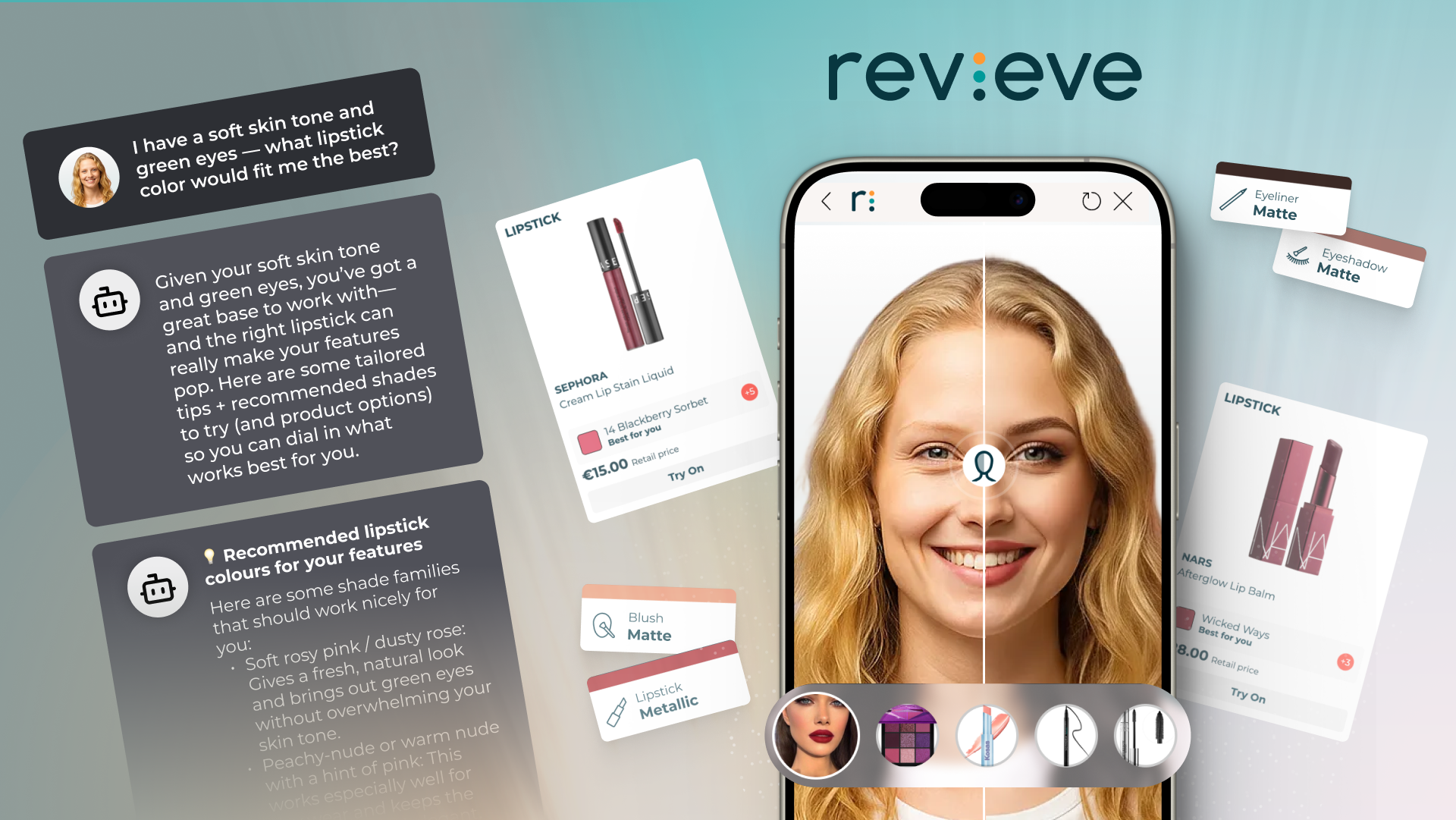
This is where Revieve’s model becomes particularly powerful. By uniting advanced AI diagnostics, zero- and first-party data, and behavioral intelligence, brands can turn anonymous traffic into deeply personalized engagement. Virtual skin and hair analysis, shade-matching and try-on tools, regimen builders, and dynamic recommendations don’t compete with AI discovery—they refine it. They make the experience feel deliberate, relevant, and human.
Personalization is what gives technology warmth. It connects the accuracy of data with the emotional resonance of brand experience. A consumer might encounter your serum because an AI assistant suggested it—but they’ll purchase it, and stay loyal to it, because your digital experience made it feel right for them.
For beauty brands and retailers, the path forward is clear:
Be present in AI-driven discovery. Ensure your product data and storytelling are structured so AI systems interpret and present your brand accurately.
Be compelling in the agentic experience. Build owned digital environments that feel intelligent, adaptive, and emotionally engaging.
AI may ignite curiosity, but only your brand’s own AI-powered experiences can turn that curiosity into connection—and revenue.
In this next era of beauty commerce, AI determines what consumers encounter. Personalization determines what they choose. The brands that excel at both will convert AI recommendations into lasting relationships—proving that even in an algorithmic world, beauty remains profoundly human.